The United Nations officially designated June 21 as the International Day of Yoga (IDY) following a 2014 resolution drafted by India’s UN Ambassador. The initiative garnered unprecedented global backing, receiving 177 co-sponsors, the highest number ever recorded for a UN General Assembly resolution. Proposed by Indian Prime Minister Narendra Modi, June 21 marks the Summer Solstice in the Northern Hemisphere. As the longest day of the year, it holds deep cultural and spiritual significance in many traditions. This year Theme: “Yoga for healthy ageing“
On June 21 each year, the Indian Council for Cultural Relations (ICCR), the cultural branch of the Ministry of External Affairs—coordinates massive yoga programs across 191 countries. This widespread international engagement significantly bolsters India’s global soft power and cultural footprint.
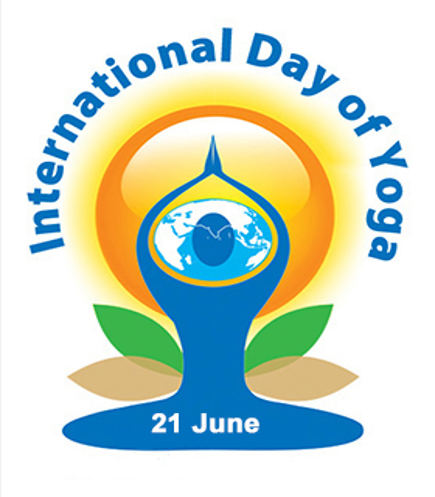
The Official Logo
The IDY logo is a visual representation of yoga’s core goal: the harmonization of humanity, nature, and the universe.
•Folded Hands: Represents the merging of individual consciousness with universal consciousness.
•Brown Leaves: Symbolize the Earth.
•Green Leaves: Represent the natural world.
•Blue Color: Denotes the element of Water.
•Brightness / Sun: Stands for the element of Fire and serves as the ultimate source of energy and inspiration.
Historical Evolution of Yoga
Rigveda c. 1500 BC -The earliest recorded mention of the word “yoga,” heavily emphasizing spiritual discipline and meditation.
Atharvaveda c. 900 BC- Introduced the foundational concepts of breath control as a vital practice.
Mahavira and Buddha 6th Century BC- Expanded the meditative aspects of the discipline, known as Dhyana Yoga.
Bhagavad Gita 4th Century BC -Authored by Ved Vyas, this text cemented the philosophy of Karma Yoga (the yoga of duty and action).
Yoga Sutras 2nd Century BC – 4th Century AD- Maharishi Patanjali compiled and codified the foundational philosophy of yoga.
Rise of Hatha Yoga 8th Century AD -Onward Yogis like Matsyendranath popularized the physical, posture-based practices of yoga recognized today.
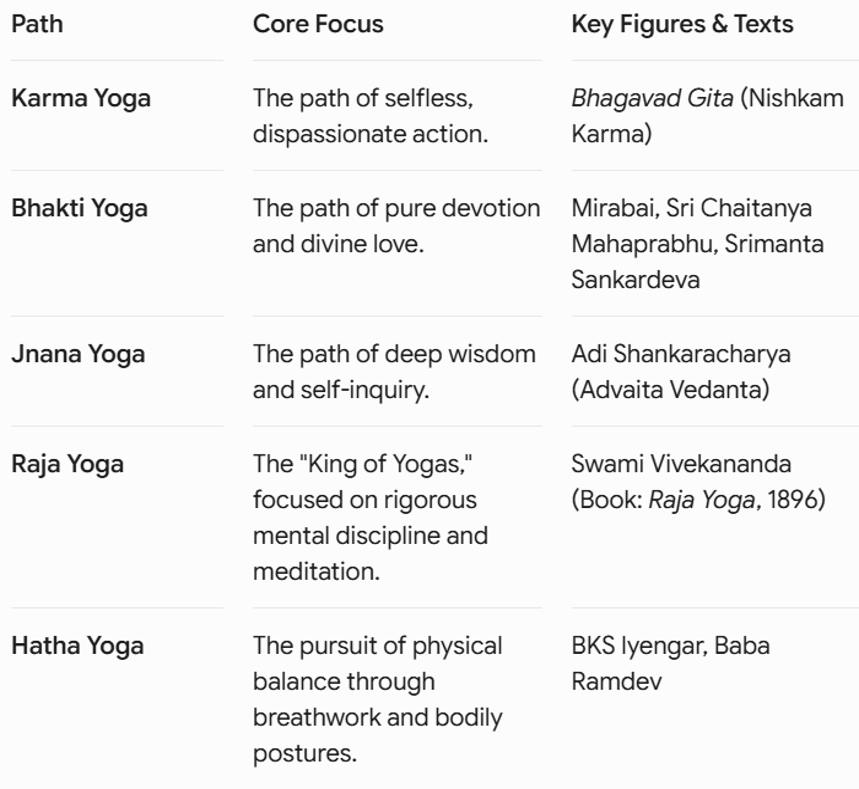
The Major Paths (Margas) of Yoga: